Embedded Medical Monitor
Our co-founder and CMO, Dr. Dipali Patel, is an experienced medical monitor working inside the network. Safety and eligibility questions get physician-level answers in hours, not escalation chains.

Traditional sites recruit strangers with ad budgets. Stryde sites are built inside specialty practices, so the eligible patients are already in the EMR, already seeing the PI, already showing up. That is why startup and enrollment run faster here, and why we publish the numbers.
Request FeasibilityShort answer: shortlist Stryde when your protocol needs outpatient enrollment in dermatology, rheumatology, or community specialty medicine, when diversity targets matter, or when a study needs rescue. Our sites sit inside specialty practices, so eligible patients are already in the EMR and already trust the investigator. That is the mechanism behind every number below, and where we are not the right fit, we say so.
Our co-founder and CMO, Dr. Dipali Patel, is an experienced medical monitor working inside the network. Safety and eligibility questions get physician-level answers in hours, not escalation chains.

Our practices serve the communities they sit in, across DFW, Houston, Louisiana, and NJ/NY, so representative enrollment is a structural property of the model. Network aggregates are published on the performance board.
NIH IBC-RMS approval in place for advanced therapy trials.
A multi-geography investigator network under a single operational and quality system, with central regulatory, quality, and finance teams.
Benchmarks are on our performance board; see the full community-versus-academic comparison.
Bottom-up, never from prevalence. Active patient counts from practice EMRs, protocol filters applied in sequence, realistic screen-failure rates by study type, and coordinator capacity applied as a hard ceiling. The result is a number we would actually commit to. The full method, with a worked example, is on how we build an enrollment number.

Our operating rule: we would rather commit to 30 and deliver 35 than promise 50 and explain later.
Outpatient enrollment at the treatment-decision moment; diversity targets; rescue timelines
Complex inpatient protocols; first-in-human units; KOL-anchored science
The practice's own panel, already in the EMR
Referrals, often after key treatment decisions were made elsewhere
6.5-week network median; as fast as two weeks when sponsor needs and documents allow
Published medians of 69 days (university) to 167 days (cancer centers)
Existing physician relationship; visits at the patient's usual clinic
Study-built relationship
Benchmark sources are on the performance board; read the full community sites vs academic centers comparison.
Outpatient Phase 2–4 in dermatology, rheumatology, and our active specialties
Biologic and injectable protocols (infusion capability, cold chain in place)
Rare disease work where community specialists hold the panel
Protocols with FDA diversity action plan targets
Studies needing rescue sites with pre-tagged eligible patients
Indications requiring infrastructure our practices do not offer; an academic site may serve you better, and we will say so in the feasibility response
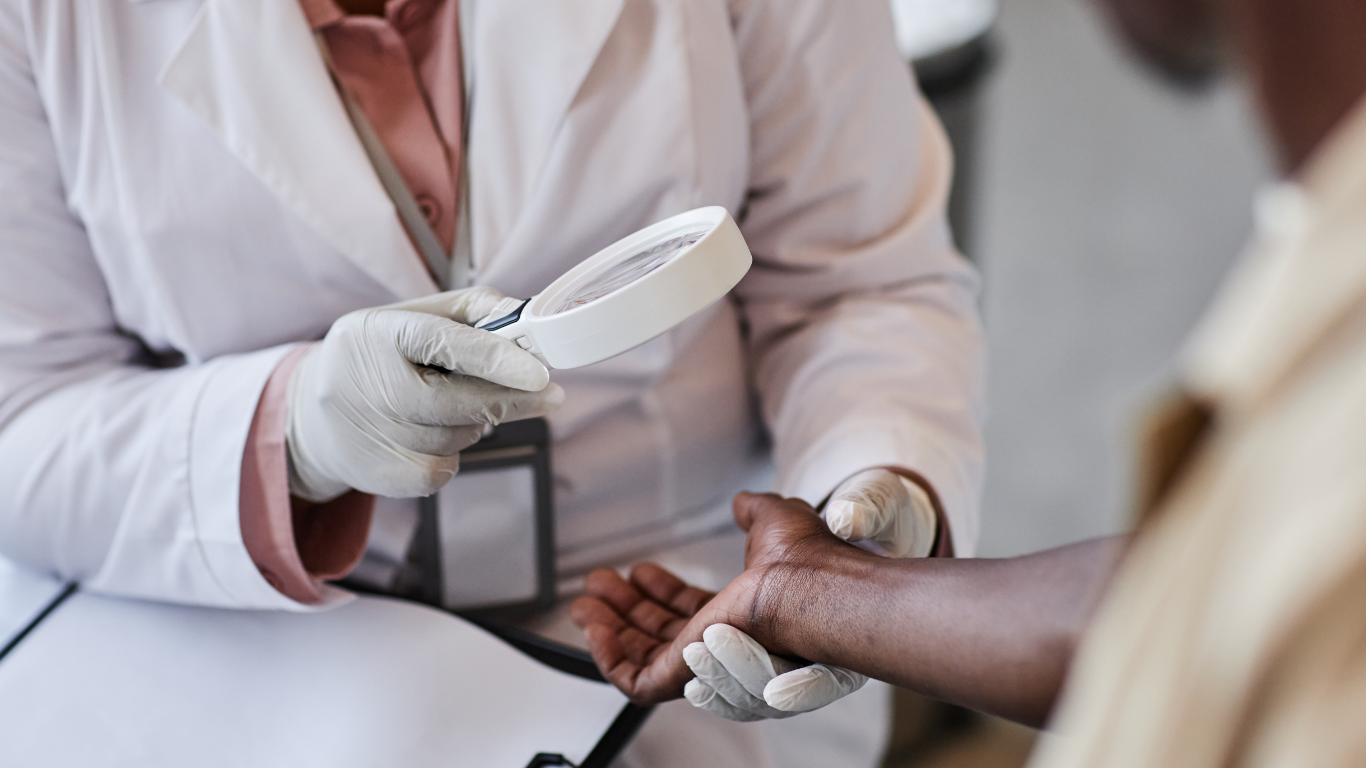
Plenty of networks claim fast feasibility. Ours is a guarantee, with a published and tracked response-time median on our performance board, and an honest no within 4 hours when a protocol needs longer. Preliminary means PI interest, estimated eligible population from real network data, a realistic enrollment range, and capability fit. The full response with EMR queries follows.
Want outcomes, not claims? See network results. Before the pitch, see our live performance metrics, enrollment results from real studies, or the way we build enrollment numbers.